
No need of art 88b GDPR to get rid of cookie banners
13 Oct 2026
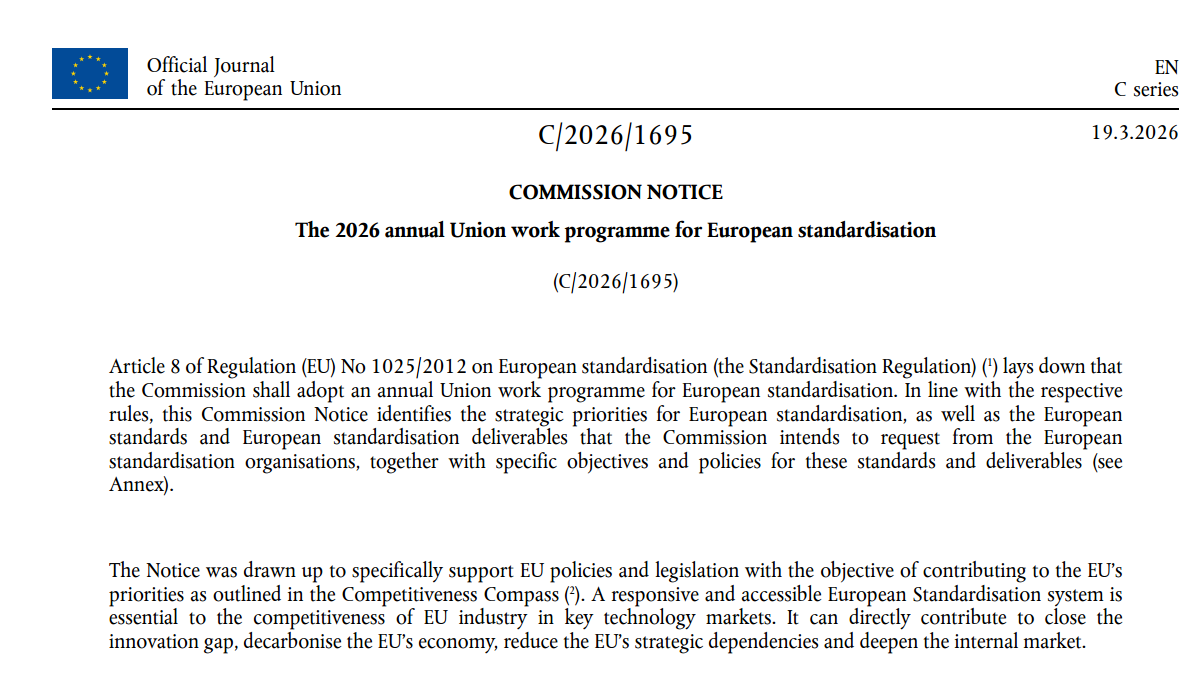
In H2 2025, ID side counted among interested parties the European Commission's asked technical questions to during its "digital omnibus" reality check. We deliberately stayed out of EU lobbying discussions around the proposed Article 88B GDPR. But as a primary state-of-the-art patent holder in this space, we are willing and ready to contribute to any standardisation discussion, within the EU or internationally.
Here is why that distinction matters.
Treating repeated banners as synonymous with consent, or assuming that meaningful individual control necessarily requires a new interaction on every website, reveals a fundamental disconnect between the legal objective and the technical reality.
Article 5(3) of the ePrivacy Directive requires consent for storing information on, or accessing information from, terminal equipment, subject to its exceptions. It does not prescribe cookie banners as the mandatory interface. Coupled with website widgets, automated signals can support valid consent.
Separately, GDPR data minimisation already provides a strong basis for voluntary AdTech standardisation: Article 5(1)(c) GDPR requires personal data to be adequate, relevant and limited to what is necessary for the purposes of processing.
In an industry built around advertising identifiers, tracking scripts, consent-management platforms and repeated transmission of privacy preferences, the opportunity to reduce unnecessary data flows is substantial. A common, machine-readable signal could allow a person's choices to be communicated and respected without repeatedly collecting, reconstructing and transmitting the same information across the digital advertising ecosystem.
Such a data minimisation rationale is already strong enough to justify a voluntary, multi-stakeholder European standard. ID side stands ready to participate and contribute to the standardisation of interoperable signals, purpose categories, website-level confirmation, refusal and withdrawal mechanisms, security requirements and auditability.
Should such standardisation facilitate implementation of Article 88b GDPR, or an equivalent legal provision, it would help comply with the data minimisation principle in the AdTech industry. And ID side supports such data minimisation.
Here is why that distinction matters.
Treating repeated banners as synonymous with consent, or assuming that meaningful individual control necessarily requires a new interaction on every website, reveals a fundamental disconnect between the legal objective and the technical reality.
Article 5(3) of the ePrivacy Directive requires consent for storing information on, or accessing information from, terminal equipment, subject to its exceptions. It does not prescribe cookie banners as the mandatory interface. Coupled with website widgets, automated signals can support valid consent.
Separately, GDPR data minimisation already provides a strong basis for voluntary AdTech standardisation: Article 5(1)(c) GDPR requires personal data to be adequate, relevant and limited to what is necessary for the purposes of processing.
In an industry built around advertising identifiers, tracking scripts, consent-management platforms and repeated transmission of privacy preferences, the opportunity to reduce unnecessary data flows is substantial. A common, machine-readable signal could allow a person's choices to be communicated and respected without repeatedly collecting, reconstructing and transmitting the same information across the digital advertising ecosystem.
Such a data minimisation rationale is already strong enough to justify a voluntary, multi-stakeholder European standard. ID side stands ready to participate and contribute to the standardisation of interoperable signals, purpose categories, website-level confirmation, refusal and withdrawal mechanisms, security requirements and auditability.
Should such standardisation facilitate implementation of Article 88b GDPR, or an equivalent legal provision, it would help comply with the data minimisation principle in the AdTech industry. And ID side supports such data minimisation.